
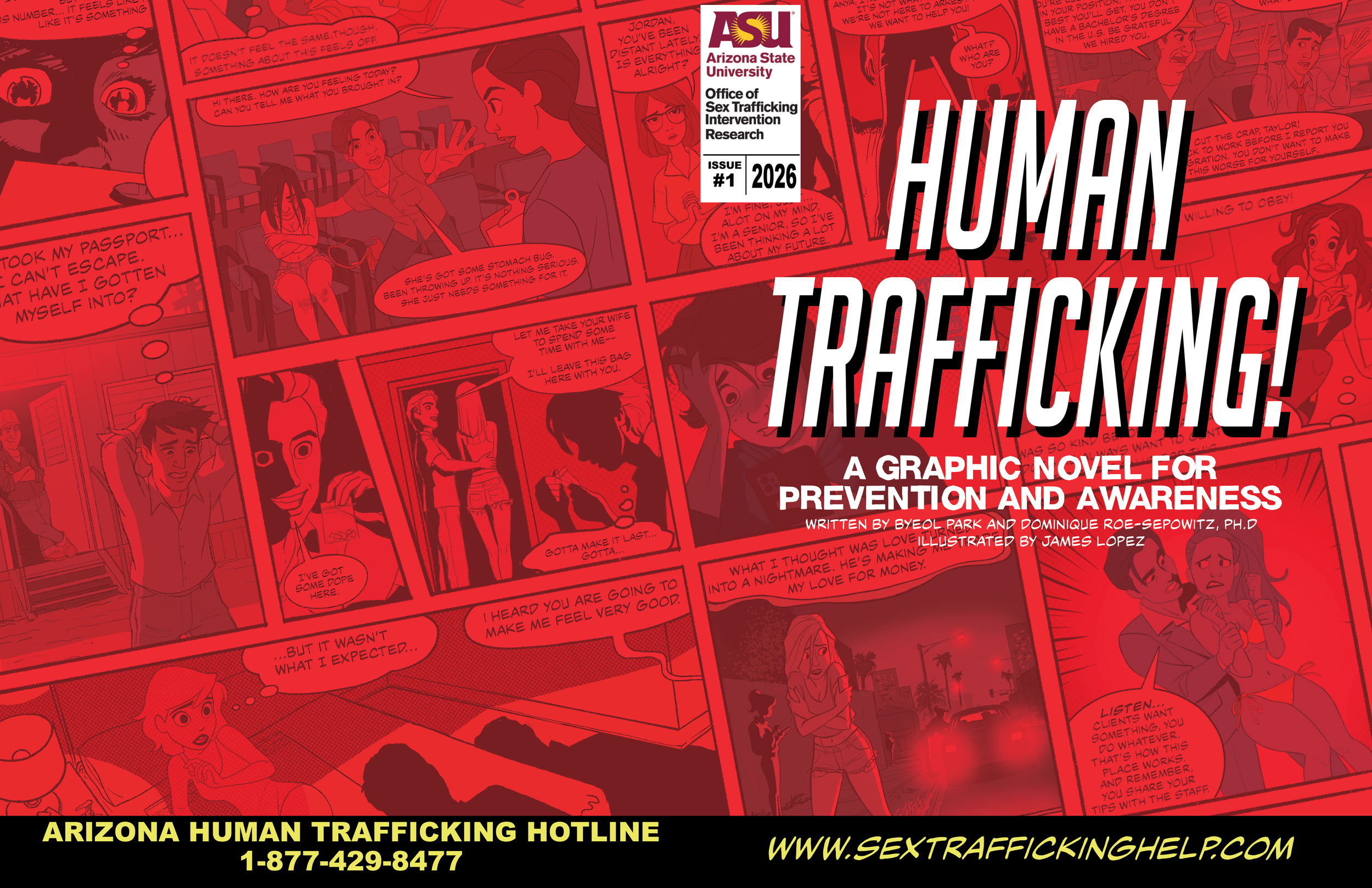
Finding Safety
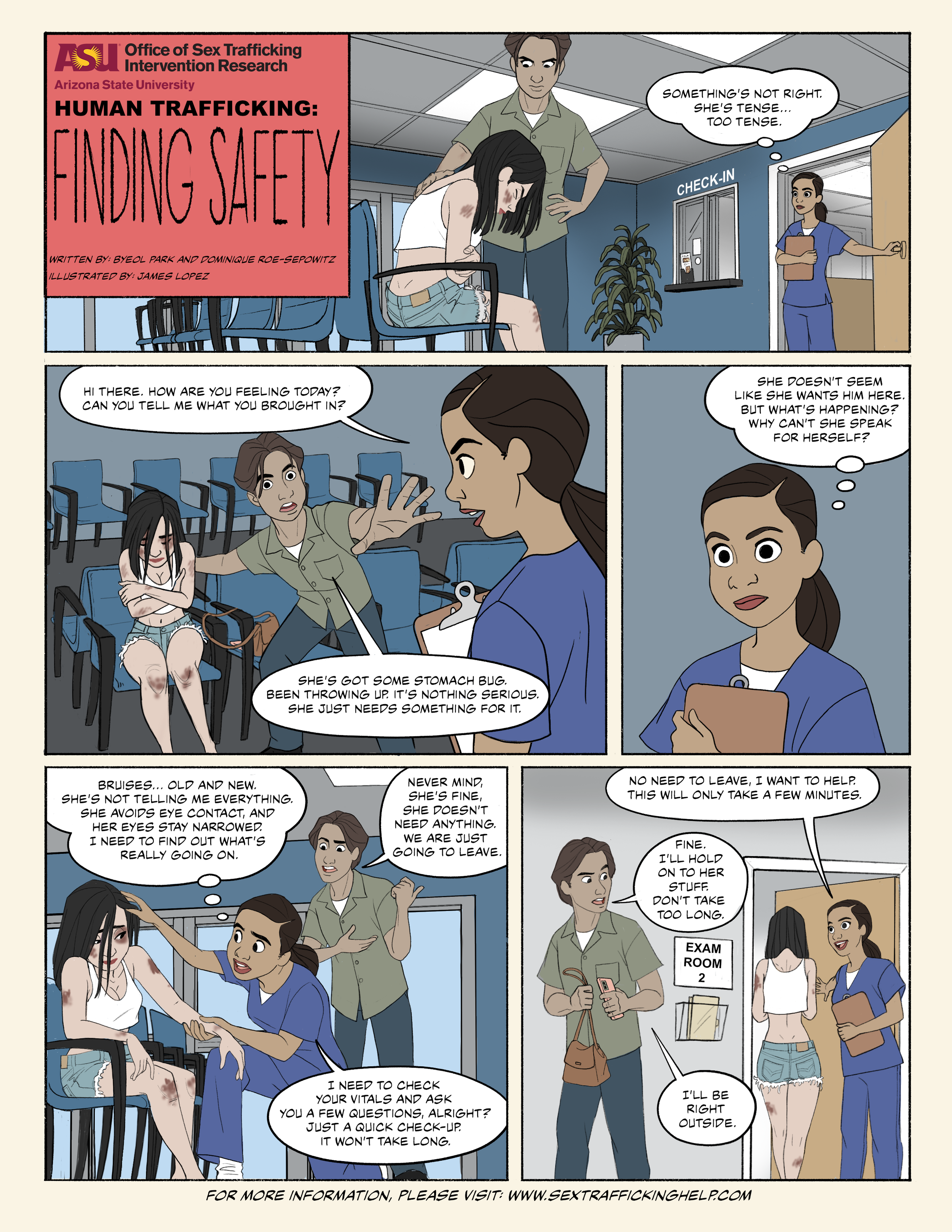
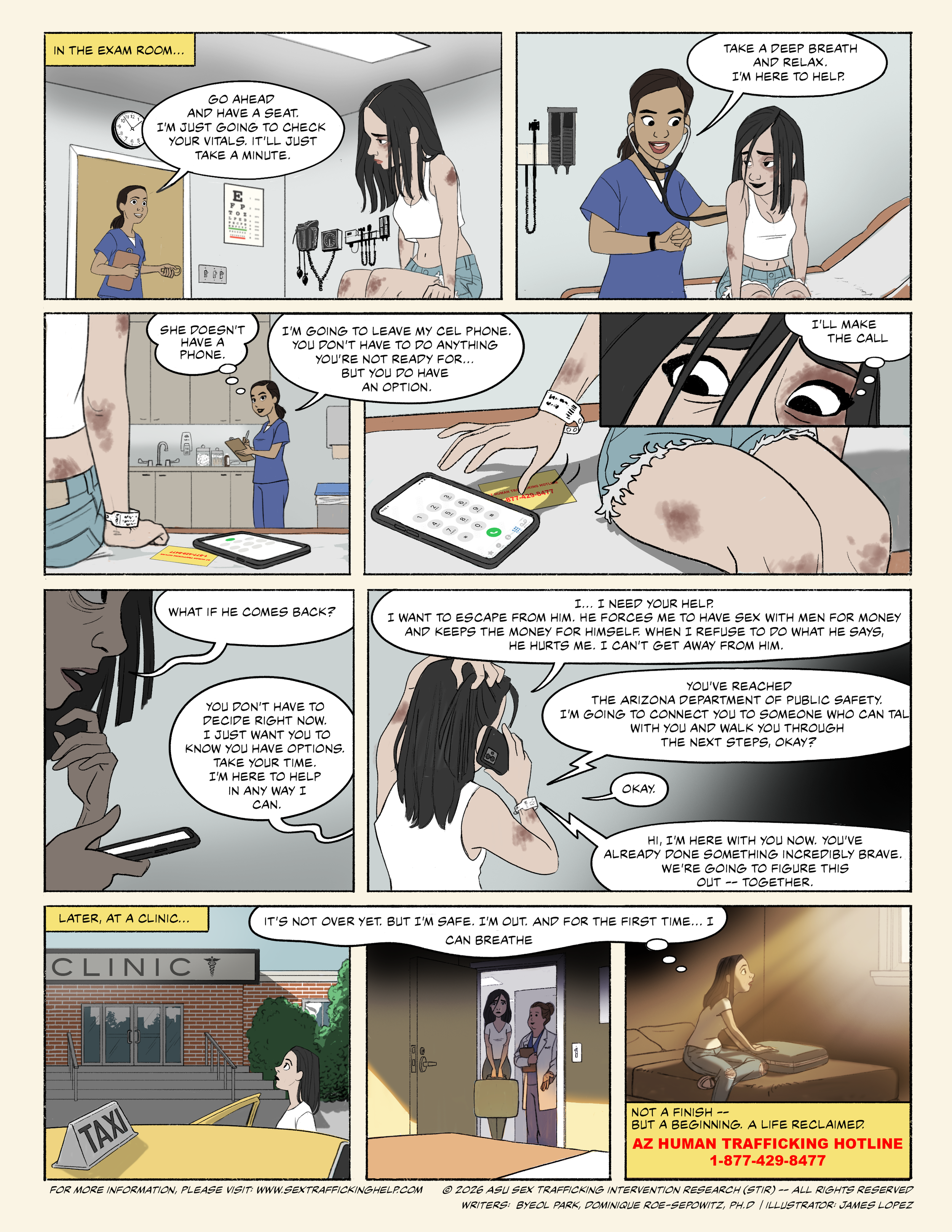
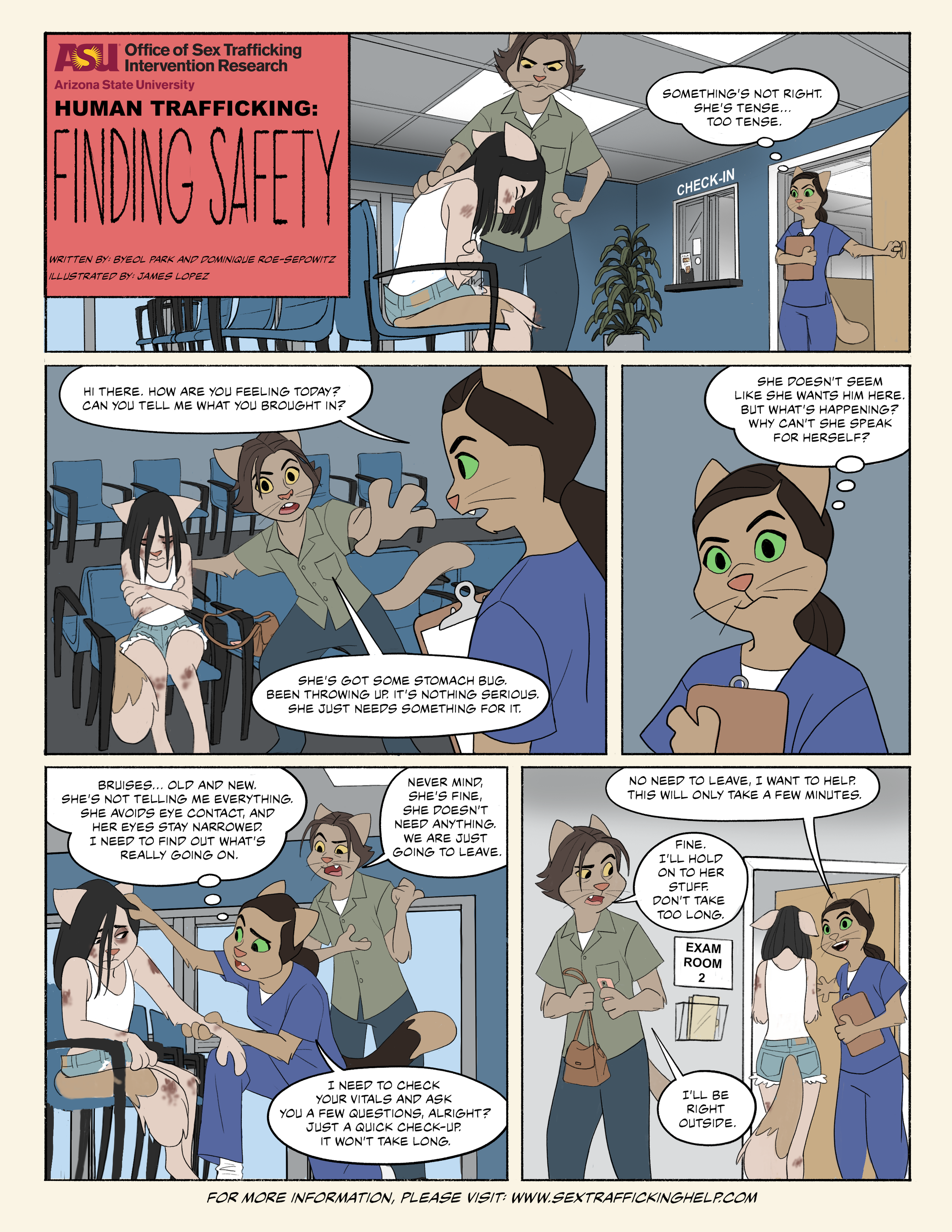
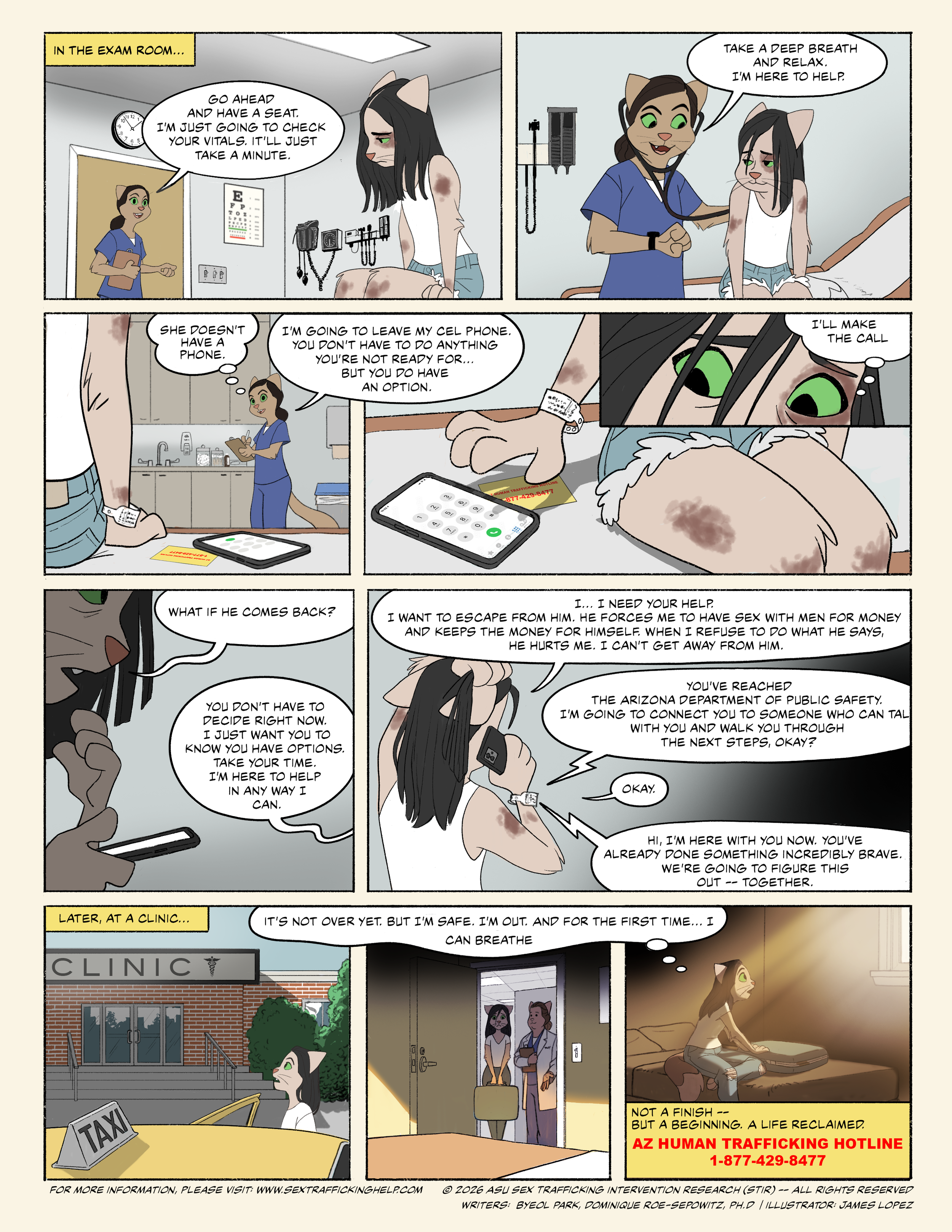
Finding Safety
Topic
Medical
Overview
A nurse trained to recognize human trafficking indicators notices a concerning situation in the hospital’s waiting area. She sees a woman who appears exhausted and has visible injuries, accompanied by a man who seems caring and protective. However, the man remains physically close and controls the interaction, raising concerns about the woman’s safety. Using her professional skills, the nurse creates an opportunity to speak with the woman privately. Is the woman truly receiving care and protection, or is something more dangerous happening?
Purpose
To raise awareness about how healthcare professionals can identify signs of human trafficking and support potential victims through careful observation, communication, and appropriate intervention.
Copyright and License
Medical: Finding Safety — Human and Cat Versions
Written by: Byeol Park; Dominique Roe-Sepowitz Illustrations by: James Lopez
Copyright © 2026 Sex Trafficking Intervention Research Office (STIR). All rights reserved, except as expressly granted under the license below.
The Human and Cat Versions of Medical: Finding Safety are licensed under the Creative Commons Attribution-NonCommercial-NoDerivatives 4.0 International License (CC BY-NC-ND 4.0).
You may share and redistribute the Human or Cat Version in its original, unmodified form for noncommercial purposes, provided that you:
· give appropriate credit to the creators and Sex Trafficking Intervention Research Office (STIR);
· provide a link to the CC BY-NC-ND 4.0 license; and
· do not suggest that STIR or the creators endorse your use.
You may not use either version for commercial purposes or distribute modified, adapted, translated, remixed, or otherwise derivative versions without separate permission from STIR.
Copyright holder: Sex Trafficking Intervention Research Office (STIR)
License: Creative Commons Attribution-NonCommercial-NoDerivatives 4.0 International (CC BY-NC-ND 4.0)
License information: Creative Commons BY-NC-ND 4.0 International
For educational, teaching, or other authorized uses, please contact STIR to request permission.